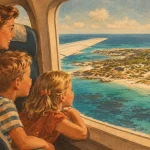

A family flight can begin with incredible coastal views and a child pressed happily against the window – or with a frantic search for a missing teddy at the departure point. Usually, the difference comes down to a few practical decisions made before the day. When travelling with children on flights, the goal is not perfect behaviour. It is creating a journey with fewer surprises, more comfort and enough flexibility for real family life.
For a short island transfer, scenic flight or regional day trip, flying can remove much of the waiting and schedule pressure that makes family travel feel like hard work. It also asks families to think differently about luggage, timing and what little travellers need to feel settled. Here is how to make the experience feel properly enjoyable from take-off to touchdown.
Choose a flight time that suits your family
The best departure time depends on your child, not a generic rule. Some young children are bright and curious early in the morning, while others need time to wake up and eat before they are ready to travel. Babies and toddlers may be happiest when a flight overlaps with their usual nap, although a missed nap can also make a short journey more difficult than it needs to be.
For school-aged children, earlier departures often work well for a day out. They are fresher, destination plans have more breathing room, and families are less likely to be racing home late with tired kids. If you are heading to Rottnest for the day, arriving by air means more time for beaches, bikes, lunch and exploring rather than spending hours in transit.
Avoid adding too many moving parts before departure where possible. A morning that involves a rushed breakfast, peak-hour traffic, parking and several bags is unlikely to start calmly. Build in a buffer, but do not arrive so early that children become bored before the journey even begins.
What children on flights need most
Children do not need an entire toy shop in their bag. They need familiar comforts, a little novelty and an adult who is not trying to unpack everything at once. A small backpack that they can carry themselves gives older toddlers and children a sense of ownership, while keeping the essentials easy to find.
Pack for the flight you are actually taking. On a brief air transfer, a favourite soft toy, a drink, wipes and one or two quiet activities may be all you need. For a longer charter or regional day out, add layers, sunscreen, a change of clothes and snacks that are unlikely to crumble, melt or create a sticky situation at altitude.
New activities can be useful, but save them for the moment they are needed. A sticker book handed over at the first sign of restlessness will feel far more special than one played with in the car beforehand. Downloads on a charged tablet can help too, particularly for older children, but do not rely on a device as the only plan. Headphones, a colouring pad, a card game or simply spotting landmarks from the window all have their place.
Keep snacks simple and familiar
Hungry children are rarely patient travellers. Bring snacks they already enjoy and can manage independently, along with water once permitted. The best options are neat, filling and not overly sugary – think fruit, crackers, cheese, sandwiches or dry cereal in a small container.
If your child has allergies, dietary requirements or needs a particular brand or texture of food, pack it yourself rather than assuming it will be available. It is one less uncertainty on the day.
Talk about the journey before you leave home
For children, uncertainty can be more unsettling than the flight itself. Explain the day in clear, positive language: where you are going, what the aircraft may sound like, when you will sit down, and who will be meeting you at the other end. Keep the explanation age-appropriate and matter-of-fact.
Young children often respond well to a simple sequence: drive, check in, fly, land, adventure. Older children may enjoy knowing the route, looking at a map or helping choose the day’s first activity. Giving them a small job – carrying their backpack, checking everyone has a hat, or finding the aircraft from a safe viewing area – turns waiting time into participation.
Be honest about unfamiliar sensations without making them sound alarming. Aircraft can be noisy, and ears can feel different during ascent or descent. For babies, feeding or offering a dummy during these stages may help. For older children, sipping water, swallowing or chewing can be useful. If your child has a cold, ear pain or a medical concern, seek advice from a health professional before travelling.
Dress for the aircraft and the destination
A picture-perfect outfit is not worth a miserable child. Choose soft layers that are easy to add or remove, closed-toe shoes where appropriate, and clothing that lets them move comfortably. Even on a warm Western Australian day, temperatures can feel different during the journey or later in the afternoon.
For an island day, think beyond the flight. Bathers, a light jumper, sun-safe clothing, a hat and a spare set of clothes can earn their place in the bag. Sand, sea water and an enthusiastic ice-cream can all change the plan quickly.
It also pays to keep key items with you rather than packed away. Wipes, medication, a light layer and a comfort item are much more useful within reach than at the bottom of a larger bag.
Set expectations without overpromising
A calm flight is a shared effort, but children are still children. They may get excited, ask questions loudly, need the toilet at an inconvenient moment or decide that the seatbelt is suddenly offensive. Aim for considerate, not flawless.
Before boarding, give a few clear rules rather than a long list. Use indoor voices, listen when the crew gives instructions, stay seated when asked, and treat the aircraft with care. Frame these as part of the experience rather than a warning. Children often rise to the occasion when they feel trusted.
If travelling in a small group, think about seating before the day. A child who is nervous may prefer to sit beside a parent, while a confident child may love a window seat. On scenic routes, window views can be a genuine part of the entertainment, with turquoise water, coastline and island landscapes doing more than any screen can.
Make the destination easy, not over-scheduled
The temptation after a fast flight is to pack every minute with activity. Resist it, especially with younger children. A better family day usually has one or two anchor plans, plenty of food and water breaks, and room to follow the mood of the group.
If you are travelling for a celebration, build in a quiet pause rather than treating the day like a checklist. A beach picnic, an easy lunch or a slow wander can be just as memorable as a full itinerary. Premium travel is not only about getting somewhere quickly. It is about arriving with the energy to enjoy it.
This is where an on-demand air experience can make particular sense for families. Less time in queues and on fixed transfer schedules can mean more time together at the destination. Rottnest Air Taxi offers a more considered way to begin an island escape, particularly for small groups who value time, views and a private feel.
Plan for the small things that derail big plans
Every parent has a different version of the emergency kit. The essentials are usually universal: wipes, tissues, a small rubbish bag, spare clothes, any required medication and a charged mobile. Add a familiar comfort item for younger children, even if they have not needed it for months. Travel has a way of reviving old favourites.
Check baggage allowances and child seating requirements directly with your operator before booking, as these can vary by aircraft and the age of the child. Ask about prams, car seats, booster seats and any mobility needs early, not on the morning of travel. Clear information makes premium travel feel easy because it prevents avoidable friction.
Most importantly, leave room for the fact that children may be unpredictable. A delayed shoe, a sudden hunger or a reluctant goodbye to the playground does not have to define the day. With a little extra time and the right expectations, children on flights can be part of the holiday’s best memory – the moment the ground falls away, the coast opens up, and the adventure truly begins.